NASA’s Parker Solar Probe gets its power from the Sun, so the solar arrays that collect energy from our star need to be in perfect working order. This month, members of the mission team tested the arrays at Astrotech Space Operations in Titusville, Florida, to ensure the system performs as designed and provides power to the spacecraft during its historic mission to the Sun.
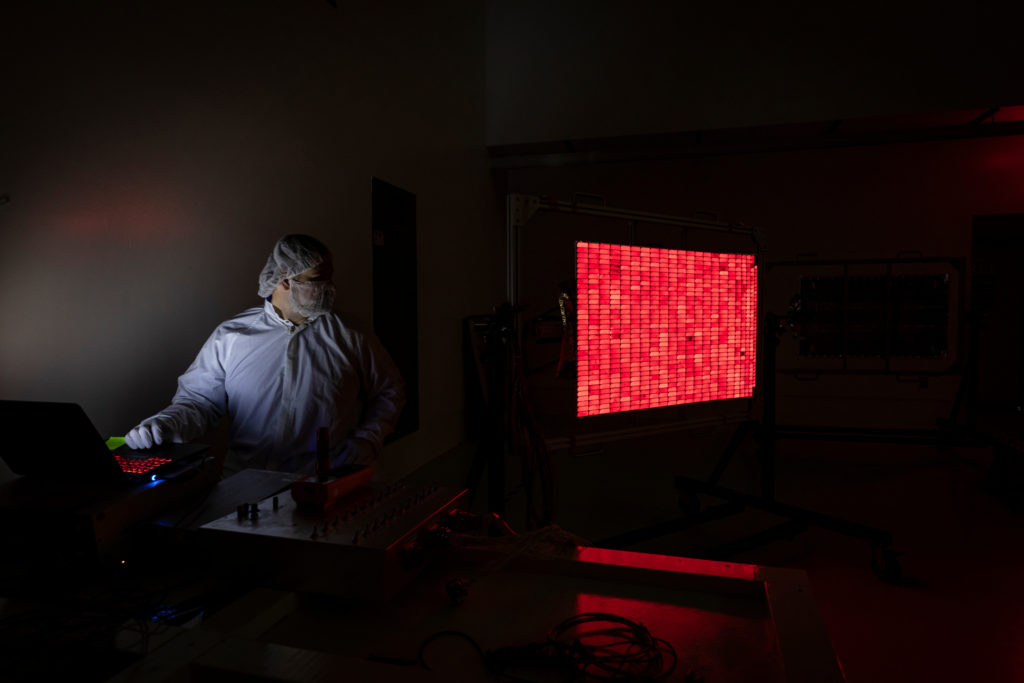
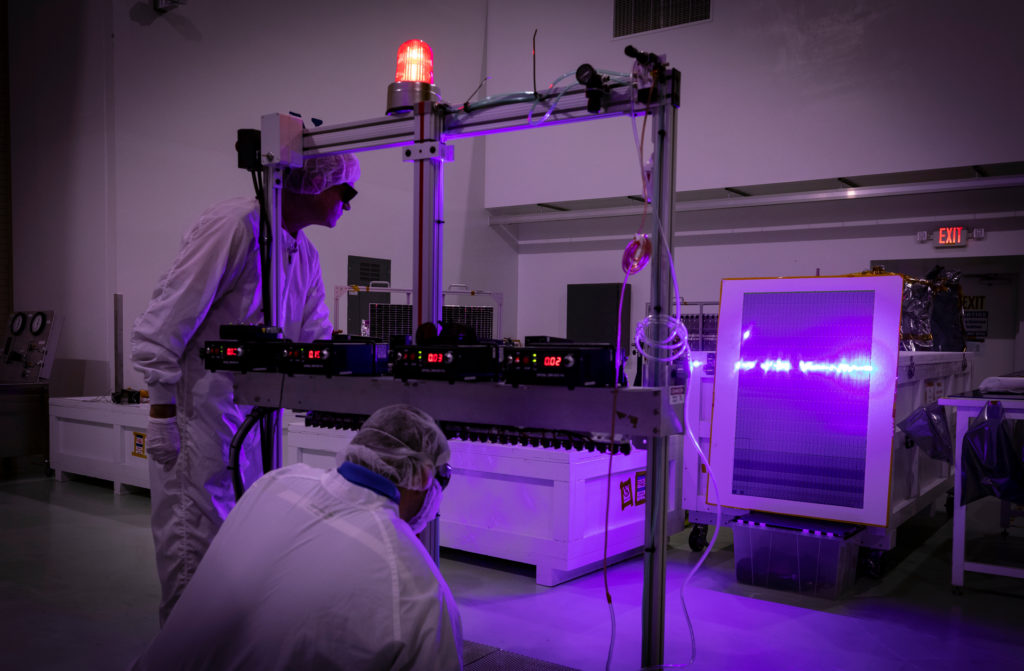
Andrew Gerger of the Johns Hopkins Applied Physics Laboratory inspects one of NASA’s Parker Solar Probe’s two solar panels by passing current through the array, which causes it to glow red and allows him to examine each individual solar cell. The testing occurred on May 2, 2018, at Astrotech Space Operations in Titusville, Florida. Credit: NASA/Johns Hopkins APL/Ed WhitmanAndrew Gerger of the Johns Hopkins Applied Physics Laboratory and Rick Stall of Newforge Technologies check and adjust a purple laser using a replica of a solar array wing on May 3, 2018. Later, when the solar arrays are attached to the spacecraft, the laser will be used to illuminate each string of cells on the array to confirm the string is connected and will provide power to the spacecraft. Credit: NASA/Johns Hopkins APL/Ed Whitman
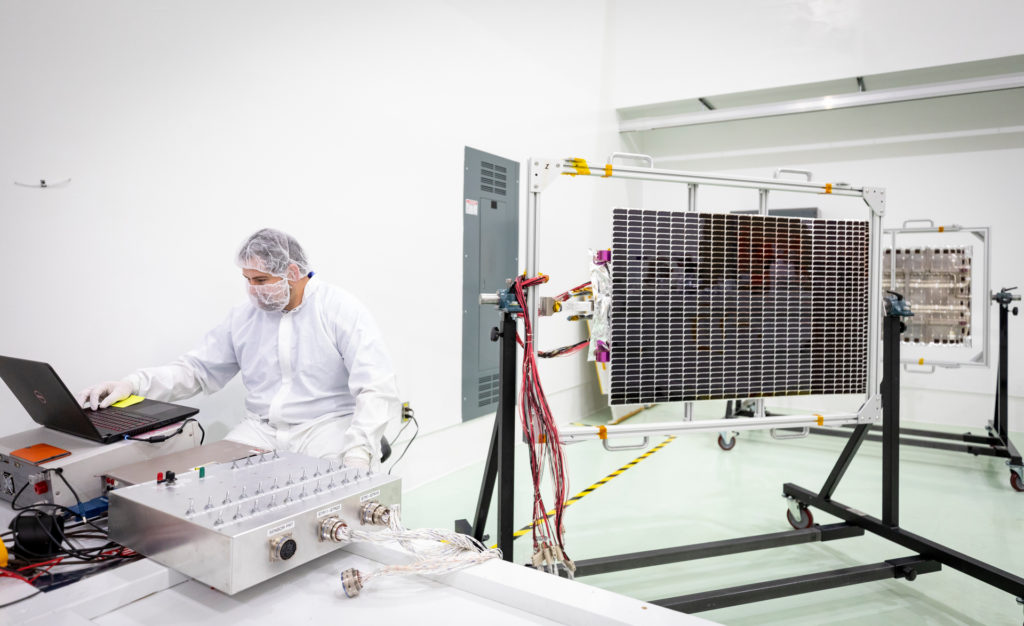
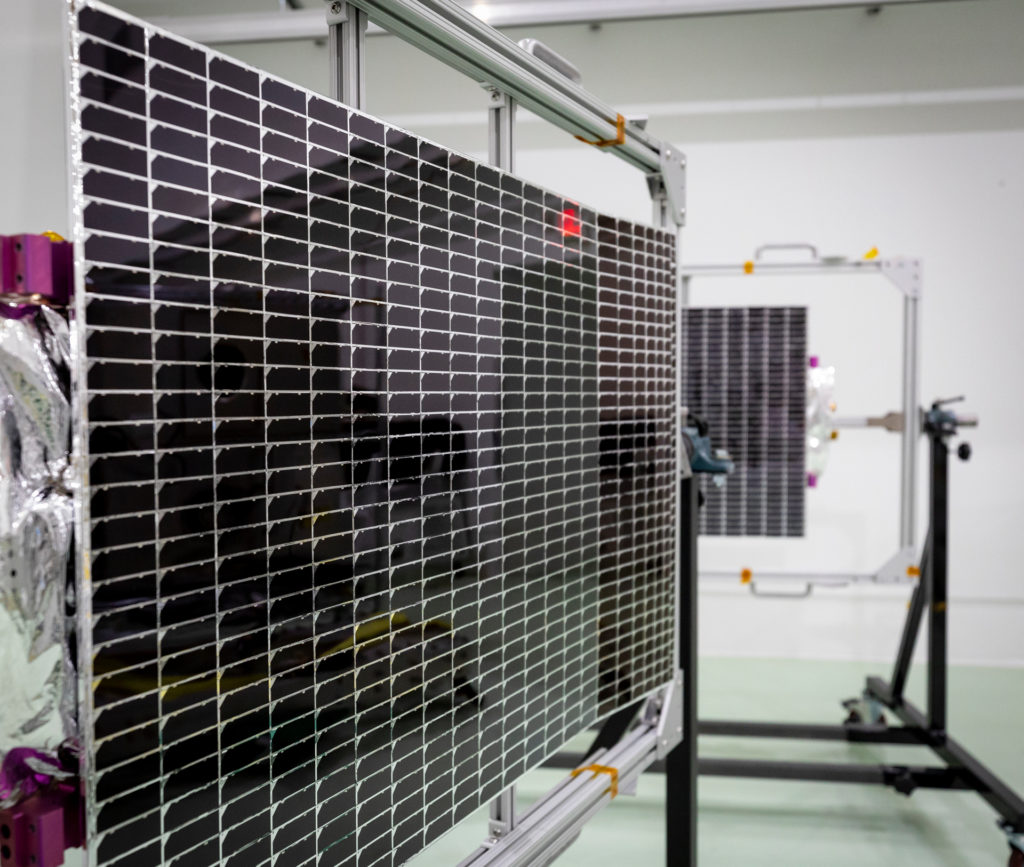
Parker Solar Probe is powered by two solar arrays, totaling just under 17 square feet (1.55 square meters) in area. They are mounted to motorized arms that will retract almost all of their surface behind the Thermal Protection System – the heat shield – when the spacecraft is close to the Sun.
Andrew Gerger, an engineer from the Johns Hopkins Applied Physics Laboratory, prepares to conduct an inspection of one of the solar arrays from NASA’s Parker Solar Probe on May 2, 2018, at Astrotech Space Operations in Titusville, Florida. Credit: NASA/Johns Hopkins APL/Ed WhitmanNASA’s Parker Solar Probe is powered by two solar arrays, shown here on May 2, 2018, at Astrotech Space Operations in Titusville, Florida. Credit: NASA/Johns Hopkins APL/Ed Whitman
Hi friends ☺ aaj mai aap sabhi ko duniya ka insano me hone wale sabse khatarnak experiment k bare btane ja rha hu to bina time waste kiye suru karte hai . Yah russian sleep experiment hai eek aisa experiment jo Russia me 1940 me huaa tha yah experiment insani duniya ka sabse khatarnak experiment hai .es experiment me 5 sanya kaidiyo ko liya gya tha jinko world war pakde gaye the unhe kaha gya ki yadi ve 30 dino tak ek kamre me bina kaye rahenge tohh unhe aajad kar diya jayega Aur kamre me ek jahrili gas chhodh di gayi yah bahut kam matra me chhodi gyi kyo ki esse mout bhi ho sakta tha pahle panch 5 dino tak kuchh badlaw dekne ko ni mila .aur unko thodi mantra me bas oxizen diya gya aur khane k liye shuki rotiya diya karte the .panch5 dino k bad unka dimang change hua usme se ek kaidi jodh jodh se chilane laga aur bhagne lga aur aur wah pagal jaisa hone lga tha usne etne jor se se chilaya ki uske vocal cords bhi fat gye bina soye aadmi pagal jaisa hone lagta .yadi aap bhi bina kh...
Hi friends aaj mai aap logo ko butter fly effect ke bare me btane wala hu to bina time waste kiye suru karta hu ☺ Friends butterfly effect k bare me sabse pahle "Edward lorenz" ne zikr kiya tha enho ek mathematical equation ki sahyata Se bataya ki duniya me log es kadar interconnect hai ki yadi brazil me aagar koi titli aapne par hilaye to Australia me tornado(bhukampp) aaa jayega isi karan ese butterfly effect kaha jata h aur hum ese aapne daily life me bhi kahte rahte h ki ekk jingari pure jangal ko khakh me tabdeel kar deti h kar k yah narmol si chij h ye aur vaise bhi foreigners ko chhoti bato ko bada batane ka sauk hota hai h aur "Edward lorenz" ne batya ki duniya me log ek wave ki tarah h jis prakar wave ke ek sire ko hilane par uske sare sire hilne lagte h thik usi prakar hum duniya me duniya me bahut se logo de interconnect hai .humra sambandh dur kisi dusre desh ke kisi vaykti se ho sakta h Aur aadhikh jankari k liye video dekh Sakte hai...



Comments
Post a Comment